
Tuesday, March 19, 2013
G.O.a.T has moved to www.getoutandtravel.net
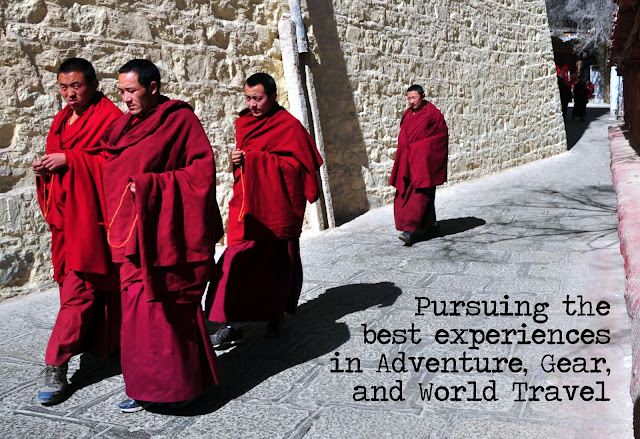
This is our final post on this Blogspot page, because Get Out and Travel is moving to www.getoutandtravel.net. We will still be providing rich content and pursuing the best experiences in adventure, gear, and world travel. We hope to see you there!

Wednesday, March 13, 2013
Hardshell or Softshell? Get Arc'teryx's Take In Under A Minute - Video

In the 60-second video below, Arc'teryx ski mountaineering athlete Greg Hill takes a look at a softshell and a hardshell and gives the quick lowdown on optimal scenarios for each. Hill makes his point nicely and concisely by contrasting two of Arc'teryx's strongest offerings: the Gamma MX Softshell, a great piece for high output activities that we took a look at a few months ago, and the Stingray Hardshell, a bombproof jacket designed to stand up to run after run in even the nastiest mountain weather.
Do you have a specific hardshell or softshell that you swear by? We'd love to hear about it, drop us a comment.
Monday, March 11, 2013
What To Order: China - Iron Skillet Beef
Chinese cuisine is a rich tapestry of distinct regional specialities, national staples, and ethnic mainstays, ranging from delightful to surprising to hard-to-stomach. At first it can all seem overwhelming and, to some I have traveled with, wholly unappealing. However, there are so many options that finding your favorite is only a matter of the right advice and an adventurous spirit.
 |
| Chicken feet are a Chinese favorite that many visitors find hard to stomach |
Not surprisingly, each region of the country proudly declares their dishes "the best," but that is a hard-fought title that each visitor should bestow themselves. When traveling in China, my favorite dish luckily transcends regional boundaries and is widely available across the country and known by all Chinese, a dish called '铁板牛肉' (tiě bǎn niúròu) or "iron skillet beef."
Slices of tender beef sirloin are fried together with peppers, onions, and spices and presented on a sizzling iron skillet. Think: a fajita without tortillas.

Another plus for travelers hesitant to venture too far into the uncharted waters of Chinese cuisine, 铁板牛肉 (tiě bǎn niúròu) is not served with the usual blistering zest that is common in many regional dishes such as Hunan, Chongqing, Guizhou and Sichuan Cuisines.
Whether your travels take you to the Middle Kingdom or the Chinese restaurant across town, add iron skillet beef to your repertoire - you won't regret it!
Saturday, March 9, 2013
Responsible Tourism: The Right Blend of Authenticity and Sensitivity
"Interacting with local people, being part of the real lives of the locals, participating in local traditions and customs... these are some aspects of ecotourism and responsible tourism that many travelers seek, in order to find unique and authentic experiences. But are we being intrusive when we seek more local and more personal experiences? What are responsible ways of conducting tourist activities in local communities, and what's the difference between responsible and irresponsible ways?"
So begins The International Ecotourism Society's recent article on the tension between finding authentic travel experiences and being culturally sensitive.
 Being a respectful visitor should always be at the forefront of every world traveler's mind when they travel, but the challenge for many is finding a way to blend responsible travel and authentic experiences. As an outsider, it can be exceptionally difficult to identify whether the context you are stepping into (activities, guide services, political requirements for visitors, etc.) is sensitive to the prevailing social situation or not.
The key for travelers is to locate agencies that have consciously postured themselves as a positive force for change in the local community. One of the best ways we have found to navigate the murky waters of cross-cultural sensitivity is to sign on with a travel company that hires local guides, or even better, a locally owned firm. While "hiring local" is not a guaranteed way to avoid irresponsible practices, it is a good place to start.
As the Ecotourism Society's article points out, "In order for businesses and destinations to avoid exploitative forms of tourism and to be responsible and respectful, they must not only seek opportunities to engage travelers in an educational manner (for example through learning to cook local food, or participating in lessons to learn traditional craft-making), but also ensure that they are working with – and not for – the local communities."
We saw examples of this in our post on China's Yunnan province, with guiding and travel outfits using their platforms as mediums for conservation and community betterment efforts, not merely vehicles for gaining profits. Organizations such as The International Ecotourism Society and the Center for Responsible Travel can help shine light on which companies have a proven record of responsible travel practices.
Get out and travel responsibly.
Full article: How Can Travelers Find Authentic Experiences That Are Culturally Respectful and Socially Sensitive? (from The International Ecotourism Society)
So begins The International Ecotourism Society's recent article on the tension between finding authentic travel experiences and being culturally sensitive.
 Being a respectful visitor should always be at the forefront of every world traveler's mind when they travel, but the challenge for many is finding a way to blend responsible travel and authentic experiences. As an outsider, it can be exceptionally difficult to identify whether the context you are stepping into (activities, guide services, political requirements for visitors, etc.) is sensitive to the prevailing social situation or not.
The key for travelers is to locate agencies that have consciously postured themselves as a positive force for change in the local community. One of the best ways we have found to navigate the murky waters of cross-cultural sensitivity is to sign on with a travel company that hires local guides, or even better, a locally owned firm. While "hiring local" is not a guaranteed way to avoid irresponsible practices, it is a good place to start.
 |
| Ziplining and other ecotourism activities can bring a huge boost to local communities |
We saw examples of this in our post on China's Yunnan province, with guiding and travel outfits using their platforms as mediums for conservation and community betterment efforts, not merely vehicles for gaining profits. Organizations such as The International Ecotourism Society and the Center for Responsible Travel can help shine light on which companies have a proven record of responsible travel practices.
Get out and travel responsibly.
Full article: How Can Travelers Find Authentic Experiences That Are Culturally Respectful and Socially Sensitive? (from The International Ecotourism Society)
Thursday, March 7, 2013
Altitude Sickness: Lessons Learned At 12,000ft. (Part 1)
A couple of weeks ago, after two months of traveling in Europe and Southeast Asia, I finally returned home to my perch at 12,000ft. in the mountains, just as I have done many times before. And just like every time before, I jumped right back into life, not giving it a second thought.
Later that evening as I headed to bed for the night, 12 hours or so after getting back, I felt myself physically wither - I started to feel a dull-but-intense headache, my joints and muscles began to ache so that I just could not find a way to lie comfortably, and I oscillated between being too hot and too cold.
I know that altitude-related symptoms can affect anyone who does not take time to adequately acclimatize no matter their level of physical conditioning, but since I had never experienced symptoms before and had maintained an active lifestyle during my travels, even traveling as high as 10,000ft. while in Europe, I honestly did not expect it to affect me when I returned.
In light of my recent humbling experience, this post will look at some ways that the NOLS Wilderness Medicine Institute and the non-profit group The Mountaineers recommend preventing altitude illness, with a follow up post to discuss assessing and treating altitude illness in the field.
Later that evening as I headed to bed for the night, 12 hours or so after getting back, I felt myself physically wither - I started to feel a dull-but-intense headache, my joints and muscles began to ache so that I just could not find a way to lie comfortably, and I oscillated between being too hot and too cold.
 |
| Reinhold Messner and Peter Habeler were the first to reach Everest's 29,029ft. summit without the aid of supplemental oxygen. They took 3 months to acclimatize and summit. |
At first I thought I was coming down with the flu, but soon realized that I was coming up against something I had never experienced in all of my time spent at high altitude: altitude sickness, or more correctly, altitude illness.
According the NOLS Wilderness Medicine Handbook, altitude illness "results from insufficient oxygen in the blood (hypoxia) secondary to decreased barometric pressure at altitude."
I know that altitude-related symptoms can affect anyone who does not take time to adequately acclimatize no matter their level of physical conditioning, but since I had never experienced symptoms before and had maintained an active lifestyle during my travels, even traveling as high as 10,000ft. while in Europe, I honestly did not expect it to affect me when I returned.
In light of my recent humbling experience, this post will look at some ways that the NOLS Wilderness Medicine Institute and the non-profit group The Mountaineers recommend preventing altitude illness, with a follow up post to discuss assessing and treating altitude illness in the field.
Tuesday, March 5, 2013
"Into the Mind" - An Upcoming Film From The North Face
Later this fall, The North Face and Sherpas Cinema will debut their upcoming film "Into The Mind," which looks to be a simultaneous exposé on the factors that drive us into the mountains in search of adventure and the cultures that call those mountains home.


Resolving to explore as much of the philosophical as the aesthetic, the film's website ventures the questions: "What drives us to overcome challenge? How do we justify risk? What forces are at the core of a mountain addiction?"
The footage in the trailer is truly spectacular, showing a mix of pristine mountain environs, a slew of The North Face's athletes in action, and the mystique of Himalayan life. Per the website, "Unique athlete segments over a multitude of mountain sport genres, depict the connectivity of Earth and window into never seen before moments."
There are a lot of big-name sponsors attached to the film in addition to The North Face, including GoPro, Recco, Black Diamond, Arc'teryx, and Mammut, so there's no doubt that "Into The Mind" will be an experience worth waiting for.


Resolving to explore as much of the philosophical as the aesthetic, the film's website ventures the questions: "What drives us to overcome challenge? How do we justify risk? What forces are at the core of a mountain addiction?"
The footage in the trailer is truly spectacular, showing a mix of pristine mountain environs, a slew of The North Face's athletes in action, and the mystique of Himalayan life. Per the website, "Unique athlete segments over a multitude of mountain sport genres, depict the connectivity of Earth and window into never seen before moments."
There are a lot of big-name sponsors attached to the film in addition to The North Face, including GoPro, Recco, Black Diamond, Arc'teryx, and Mammut, so there's no doubt that "Into The Mind" will be an experience worth waiting for.
Sunday, March 3, 2013
MSR Reactor Stove Grabs Top Award At 2013 ISPO - Video
 |
| MSR's award winning Reactor 1.0L Stove System |
While the Reactor 1.0L Stove System is new to the market, Mountain Safety Research (MSR) is well known and respected among guides and outdoor adventurers. According to a review by Alpinist magazine, "MSR has long made the stoves favored by guides... MSR's Reactor is by far the best. In my experience, the Reactor reduces my fuel needs by 50 percent." Another review, by Outdoor Gear Lab, calls the Reactor, "the fastest, easiest to use, and most storm-proof camping stove we tested."
The following video is from Outdoor Gear Lab's review of the Reactor Stove:
MSR's Reactor Stove Systems includes the new, IPSO award-winning 1.0L system, a 1.7L system, and a 2.5L system, all of which are highly praised. Benefits that MSR claims of their Reactor Stoves include:
- Unrivaled Boil Time: Outperforms the competition in head-to-head lab tests—boiling .5 liter of water in just 1.5 minutes—with an even greater advantage out in the real world.
- Unmatched Wind Protection: Heat exchanger completely encloses radiant burner head, virtually eliminating the effects of wind to maintain outstanding boil times and save fuel.
- Maximum Efficiency: Patent-pending radiant burner, heat exchanger and internal pressure regulator produce best-in-class, fuel-sipping efficiency in all conditions.
For full reviews of MSR's Reactor Stoves, check the following:
Friday, March 1, 2013
Air Travel Health Tips: Fact vs. Fiction - Video
Getting sick when you travel is a bummer, and nothing stings worse then picking up a bug on your way to your destination. Coincidentally, there are a lot of myths about the role air travel can play in disease transmission.

The key to healthy travel, especially when air travel will be involved, is identifying misinformation and making wise choices. In the video link below, the Chief of Medicine at MIT Medical walks through some basic misconceptions about air travel health and gives a few pointers on how to protect yourself from contracting diseases en route.
Did we choose this video because of the vintage airline footage? Maybe. Did the cheesy role-playing cement our choice? Possibly. Is the amount of emphasis put on portable hand sanitizer pretty comical? Definitely.
All of that notwithstanding, when the Chief of Medicine at MIT talks, we usually listen.
On a related note, travel medical insurance might be a good idea if you are flying to an adventure somewhere off the beaten path. Oh, and don't forget your hand sanitizer.
The key to healthy travel, especially when air travel will be involved, is identifying misinformation and making wise choices. In the video link below, the Chief of Medicine at MIT Medical walks through some basic misconceptions about air travel health and gives a few pointers on how to protect yourself from contracting diseases en route.
Did we choose this video because of the vintage airline footage? Maybe. Did the cheesy role-playing cement our choice? Possibly. Is the amount of emphasis put on portable hand sanitizer pretty comical? Definitely.
All of that notwithstanding, when the Chief of Medicine at MIT talks, we usually listen.
On a related note, travel medical insurance might be a good idea if you are flying to an adventure somewhere off the beaten path. Oh, and don't forget your hand sanitizer.
Wednesday, February 27, 2013
Deserts In The Winter - Adventure Journal's 11 Favorite Things About The Desert
Spring is almost upon us. Or is winter in full swing? Either way, some folks are looking forward to the days of one less layer and a pint on the porch, instead of a mug by the fire. If you're not one of those, keep enjoying the powder. If you are looking forward to warmer days and... shorts, Adventure Journal gives a timely reminder that the desert is still there, waiting for you.

Out west, many of the US National Parks (11, by Adventure Journal's count) have enough sand and scree and sun to make you completely forget that you were wearing tights and gloves on your run last week. So, shrug off your anxious twitch and get some inspiration with AJ's 'The List: The 11 Best Things About The Desert.'
Our favorite from The List? The Rivers (#6). Nothing feels more like summer that sunning on the burning-hot side of a whitewater raft in nothing but a swimsuit and life jacket, and there's no better way to cheat Old Man Winter out of his due than by grabbing a mid-winter raft trip in the American Southwest.
Enjoy the read, pack a bag, and get ready for your out west road trip (don't forget oft overlooked Canyon de Chelly). Or you could always go to Thailand.

Out west, many of the US National Parks (11, by Adventure Journal's count) have enough sand and scree and sun to make you completely forget that you were wearing tights and gloves on your run last week. So, shrug off your anxious twitch and get some inspiration with AJ's 'The List: The 11 Best Things About The Desert.'
Our favorite from The List? The Rivers (#6). Nothing feels more like summer that sunning on the burning-hot side of a whitewater raft in nothing but a swimsuit and life jacket, and there's no better way to cheat Old Man Winter out of his due than by grabbing a mid-winter raft trip in the American Southwest.
Enjoy the read, pack a bag, and get ready for your out west road trip (don't forget oft overlooked Canyon de Chelly). Or you could always go to Thailand.
Monday, February 25, 2013
Canyoning, Paragliding, and Hiking - Switzerland's Jungfrau Region Has More Than Just Skiing - Video
The 'Jungfrau' Region of the Swiss Alps, so named for the 13,669 ft. (4,166m) peak that looks down on the numerous lesser prominences and valleys spanning its base, is home to some of the best skiing in Europe. Yet, despite being home to what many consider the best skiing in the world - including this year and next year's Ski World Cup in Jungfrau's town of Wengen, the region refuses to be pigeonholed as just a "ski destination."
In addition to skiing, snow tubing, and sledging, the Jungfrau Region offers a perfect environment for numerous other mountain sport activities, including paragliding and BASE jumping, hiking, and canyoning.
The area's craggy landscape and deep valleys seem to posses an almost irresistible lure for folks who like to throw themselves off terra firma and into the secure embrace of a parachute harness. Watch in the video below as a band of BASE jumpers from the UK wax poetic while they tackle both the Eiger and the cliff face overlooking the valley between the villages of Lauterbrunnen and Stechelberg, one of the deepest in the Alpine chain:
In addition to skiing, snow tubing, and sledging, the Jungfrau Region offers a perfect environment for numerous other mountain sport activities, including paragliding and BASE jumping, hiking, and canyoning.
The area's craggy landscape and deep valleys seem to posses an almost irresistible lure for folks who like to throw themselves off terra firma and into the secure embrace of a parachute harness. Watch in the video below as a band of BASE jumpers from the UK wax poetic while they tackle both the Eiger and the cliff face overlooking the valley between the villages of Lauterbrunnen and Stechelberg, one of the deepest in the Alpine chain:
Saturday, February 23, 2013
The Adventure Community Looks At Health Insurance
In a follow up to our post on the challenge of finding health insurance for those who engage in "high risk" adventure activities such as rock climbing, here we look at a case study involving one of the most high risk activities out there today: BASE jumping.
On November 19, 2012, professional BASE jumper Jill Kuzman had just made her 4th jump from a towering sandstone cliff near Moab, Utah, when she experienced every BASE jumper's worst nightmare - her parachute opened backwards, causing her to plummet to the desert floor. Kuzman broke her leg on impact but was lucky to have the immediate assistance of medics and doctors who were jumping alongside her that day. Her competent companions treated her as they rushed Kuzman to the hospital, minimizing the consequences of a fall that could have turned out much worse. Today, Jill Kuzman is off crutches and moving toward a full recovery.
Unfortunately, like many athletes and adventurers, Jill Kuzman did not have health insurance coverage at the time of the incident and quickly racked up $120,000 in medical bills. Friends pitched in and Kuzman herself reached out on Facebook for donations to help offset her cost, bringing in close to $10,000 toward her bills, but a majority of her expenses still remain.
Not long after Kuzman's incident something of a firestorm, focused on uninsured BASE jumpers and adventure seekers, erupted on BASEjumper.com, with some contributors voicing support, others exasperation that someone would engage in such high risk activities uninsured, when accidents are so likely to occur. In his article The Adventurer's Health Insurance Conundrum on National Geographic's Adventure Blog, James Mills outlines the argument that unfolded on the site and examines some of the points that were brought to light, which adventure-seekers across a number of sports must grapple with.
 |
| BASE jumper prepares to launch from Christ the Redeemer in Rio de Janeiro |
Unfortunately, like many athletes and adventurers, Jill Kuzman did not have health insurance coverage at the time of the incident and quickly racked up $120,000 in medical bills. Friends pitched in and Kuzman herself reached out on Facebook for donations to help offset her cost, bringing in close to $10,000 toward her bills, but a majority of her expenses still remain.
Not long after Kuzman's incident something of a firestorm, focused on uninsured BASE jumpers and adventure seekers, erupted on BASEjumper.com, with some contributors voicing support, others exasperation that someone would engage in such high risk activities uninsured, when accidents are so likely to occur. In his article The Adventurer's Health Insurance Conundrum on National Geographic's Adventure Blog, James Mills outlines the argument that unfolded on the site and examines some of the points that were brought to light, which adventure-seekers across a number of sports must grapple with.
Thursday, February 21, 2013
What To Order: Thailand - Thai Tea
 |
| A barista whips up Thai tea on a train platform in just a few moments |
Thai tea is a ceylon tea (though often now made with cheaper black tea leaves and colored with food coloring) that is mixed with evaporated milk and sweetened condensed milk before being poured over ice for a cool and refreshing liquid refreshment. Thai tea's burnt orange hue and creamy, slightly smokey, sweet flavor make this iced drink quite distinct, with many devotees and the occasional detractor.
For myself, I will admit that I was not completely sold on my first sip. However, my second sip led to a third and it quickly grew into endearment, such that now I look forward to any chance to grab a "cha-yan" (Thai, lit. "iced tea"). There is also a variation of Thai tea with an added lime flavor called "cha-manao," if you are looking to increase the "tropical quotient" of your drink.
 |
| Mixed Thai tea ready to be poured over ice |
In Thailand, street stands and small beverage shops are everywhere, whipping up Thai tea in no time. In fact, there are even iced coffee and Thai tea stalls on the Bangkok BTS skytrain platforms. So, get a leg up on the heat and start your Thai travels with a Thai tea!
Tuesday, February 19, 2013
Skimo: A Novice's Introduction To Ski Mountaineering - Video
From adventure racing, which has been in a constant state of emerging and refining for the last 20 years, to free solo climbing, which jumped onto the outdoor sporting scene afresh last year with Alex Honnold's speed climb of Yosemite's El Capitan, there seems to be a steady flow of new and exciting possibilities.
 |
| A pack of ski mountaineering competitors race uphill |
Ski mountaineering, or 'skimo' as it is often called in the US, has maintained long-term popularity in Europe under the name 'randonee racing' and is quickly gaining a following in the United States.
The following video from the 2013 Eddie Bauer Winter Mountain Games Ski Mountaineering Race that was just held in Vail, Colorado, gives a great glimpse into the grueling challenge that skimo competitors are enthusiastically throwing themselves into:
Sunday, February 17, 2013
Wild Yunnan - China's Hidden Gem
China is an intriguing mystery to many trekkers and adventurers, with nowhere more compelling than the wilds of western China: pandas in Sichuan province and the wide open Tibetan plateau in Qinghai province, to say nothing of Tibet itself. Owing largely to many travelers' only superficial familiarity with China, too many of the country's most worthwhile sights and experiences are missed - possibly nowhere more than in southwesterly Yunnan province.
Not only is Yunnan where the Himalayas fade into the sultry jungles of Southeast Asia, it is home to 25 of China's 55 ethnic minorities and some of the greatest outdoor experiences you've never heard of. The pristine natural landscapes blend with the rich variety of minority cultures to offer a wealth of memorable adventure travel opportunities.
Earlier we wrote about hiking the trails in Yunnan's Tiger Leaping Gorge, reportedly the deepest gorge in the world, where a tributary of the upper Yangtze cuts between two 5,000+ meter peaks to create thundering rapids, and Celeste LeCompte has just reported on her experience rafting Yunnan's Nu River with raft guiding outfit Last Descents in her Outside Online article China's Last Wild River.
Other organizations, such as Climb Dali, Bike Yunnan, and Action Asia's Lijiang 3-Day Ultra Marathon, offer tailored experiences that delve deep into the treasures that lie hidden in Yunnan's far corners. While the outdoor sporting market is certainly still in its fledgling stages in Yunnan, there are a growing number of credentialed guide outfits offering forays into southwest China's best kept secret.
One additional aspect of choosing one of Yunnan's many adventures that should not go overlooked is the invaluable difference tourism dollars can make in tipping the scales in favor of conserving, rather than developing, China's vast but shrinking natural beauty.
A laudable example, Last Descents' owner Travis Winn uses his raft guiding as a platform to raise awareness among local Chinese policy makers and the many up-and-coming Chinese who are beginning to head for the outdoors of the need for conservation efforts in many of China's lesser-known travel spots which are in danger of being overrun by China's modernization efforts.
 |
| Beautiful Lugu Lake in Yunnan's northern mountains |
Not only is Yunnan where the Himalayas fade into the sultry jungles of Southeast Asia, it is home to 25 of China's 55 ethnic minorities and some of the greatest outdoor experiences you've never heard of. The pristine natural landscapes blend with the rich variety of minority cultures to offer a wealth of memorable adventure travel opportunities.
 |
| Enjoy a Climb Dali route over Yunnan's Er Lake |
Other organizations, such as Climb Dali, Bike Yunnan, and Action Asia's Lijiang 3-Day Ultra Marathon, offer tailored experiences that delve deep into the treasures that lie hidden in Yunnan's far corners. While the outdoor sporting market is certainly still in its fledgling stages in Yunnan, there are a growing number of credentialed guide outfits offering forays into southwest China's best kept secret.
 |
| Last Descents leads Tibetan monks on whitewater fun |
A laudable example, Last Descents' owner Travis Winn uses his raft guiding as a platform to raise awareness among local Chinese policy makers and the many up-and-coming Chinese who are beginning to head for the outdoors of the need for conservation efforts in many of China's lesser-known travel spots which are in danger of being overrun by China's modernization efforts.
No matter what type of adventure you are looking for, chances are Yunnan has it!
Friday, February 15, 2013
World's Best Hikes According to National Geographic
Though it's just a tease for many, National Geographic has put out a list of "epic trails" to hike.
 |
| Santa Cruz Trek in Peru's Cordillera Blanca |
Hey, it can't hurt to dream, and with a little planning, it's not hard for you to take the initiative to turn your dream into an epic hike!
Wednesday, February 13, 2013
Packing Tip: Osprey Airporter LZ - Save Your Straps!
 |
| A backpacker with her closest travel companion - her pack |
More than anything, a backpacker needs his or her backpack to hold up to the beating it will receive being thrown into airplane baggage bays, on bus roofs, and over horse saddles day after day.
It is more than a backpack - it is a seat, a pillow, a coffee table, a closet. It is home.
Osprey, well known for their packs and uber-efficient travel equipment, has a practitioner's grasp of the demands that are placed on their packs by trekkers around the world every day.
The Osprey Airporter LZ was birthed out of Osprey's practical understanding of the backpacker's way of travel - a simple, durable, light and packable duffle bag who's one and only job is to protect zippers and straps from the careless hands of baggage handlers, security checkpoint personnel, bellhops, and bus drivers.
 |
| The old Airporter was one-size-fits-all. Now, you can choose one to fit your pack. |
Now, this long-time favorite of trekkers and backpackers has gotten injection of Osprey's genius. The updated Airporter now comes:
- In three sizes to more suitably accommodate packs of different volumes;
- With improved handles;
- With a more comfortable shoulder strap.
As much as I love my old-model Airporter which has served me and my pack faithfully for years, all three of these improvements are much appreciated. A great buy for US$30-$40, this is a no-brainer - you should definitely have the Osprey Airporter LZ in your luggage stash.
Monday, February 11, 2013
Great Smoky Mountains National Park To Charge For Backcountry Camping

A measure to introduce a fee for backcountry camping in the Great Smoky Mountains National Park, which was adopted last year, goes into effect 2 days from now, on February 13th. The National Park Service has said that fees collected will allow for more staff and longer hours in the Backcountry Office, in order to provide more trip planning assistance for potential visitors.
The system for obtaining permits is still being finalized and the latest information can be found at the Great Smoky Mountains Backcountry Camping website, but the word so far is that it will be $4 per person per night to camp in the backcountry and that an online reservation system is in the works.
Reservations may be made up to 30 days in advance, so be sure familiarize yourself with the new system in advance and nab your reservations before someone beats you to it!
Saturday, February 9, 2013
Do This, Not That: Movie Theaters in Thailand
If you happen to grab a matinée movie showing in Thailand (or any showing, for that matter) while traveling through Southeast Asia, there is a Thai custom that is a regular part of every Thai movie-viewing experience that you should certainly be aware of.
At some point before the movie starts, you will be expected to honor the king of Thailand by standing. The process is simple - during the previews, a song called the "Thai royal anthem" will start playing and everyone in the theater will rise.
While the song plays, a video usually plays on screen, showing pictures or video of the king over the course of his life and highlighting some of his accomplishments, as well as accomplishments of the Thai people. At the end of the anthem, everyone may return to their seats.
Revering the sovereign is important in every country with a monarchy, and Thailand is no exception. Penalties for slandering and insulting the royal family are stiff in Thailand and should not be taken lightly by visitors, as you can see from the following news account:
BBC News: Thai comedian and 'red-shirt' leader jailed for royal insult
However, if you follow the lead of those around you, everything should go smoothly. And then you can sit back and enjoy the show.
 |
| The king of Thailand as a younger man |
While the song plays, a video usually plays on screen, showing pictures or video of the king over the course of his life and highlighting some of his accomplishments, as well as accomplishments of the Thai people. At the end of the anthem, everyone may return to their seats.
Revering the sovereign is important in every country with a monarchy, and Thailand is no exception. Penalties for slandering and insulting the royal family are stiff in Thailand and should not be taken lightly by visitors, as you can see from the following news account:
BBC News: Thai comedian and 'red-shirt' leader jailed for royal insult
However, if you follow the lead of those around you, everything should go smoothly. And then you can sit back and enjoy the show.
Thursday, February 7, 2013
"New" Mountain Sports Manufacturer - Salewa

From my first few encounters with Salewa in Chinese department stores, I assumed that it was an overpriced "outdoor equipage" brand with no real pedigree, a fairly common practice in China. However, the agent in Grindlewald introduced me to Salewa's long German history and innovative products.
Founded in 1935 in Munich, Germany, Salewa's reputation in Europe is well established. With the launch of their American headquarters in Boulder, Colorado, in 2007, Salewa has brought their mountain sport experience to North America. Preceding their recent establishment of a North American headquarters, Salewa has had a strong relationship with the likes of REI, Black Diamond, EMS, Yvon Chouinard (Patagonia), and Doug Tompkins (The North Face) since the 60's and 70's, giving them all the credibility they need.
Of the Salewa products that I saw in Switzerland, the most noteworthy was their footwear.
 |
| Salewa MTN Trainer with "Salewa Y" ankle and heel support technology |
Salewa offers lines of smart looking shoes and boots equipped with Gore-Tex and Vibram technology for:
- Mountaineering
- Winter Trekking
- Alpine Approach
- Tech Approach
- Hike Approach
As our writers continue to familiarize themselves with Salewa, we will continue to let you know what we learn about this "new" name. Leave us a comment and let us know what you've thought about your experience with Salewa and their products.
Tuesday, February 5, 2013
Waterproof Down: What's The Word? - Video
Since the announcement in late-2011 of a forthcoming water repellant down insulation (no company thus far has actually made a claim of "waterproof"), there has been quite a buzz in the outdoor sports world. So what do you need to know about water repellant down?
Due to down's susceptibility to moisture (in the forms of perspiration, snow melt, and precipitation) and subsequently diminished loft and insulating ability, until now the best solution has been to pair a down insulating piece with a waterproof shell layer (a hardshell jacket or bivvy sack, for instance) or to use synthetic insulation, instead. However, with the announcement of a hydrophobic down, all of that may no longer be necessary.
DownTek, one of the companies supplying this new down fill, claims that their product is "water repellant, anti-microbial, and anti-bacterial." Using a nano polymer treatment to coat goose and duck down fills so that they retain their warmth-to-weight ratio even when wet, DownTek was recently awarded GearJunkie's "Best In Show" at the 2012 Outdoor Retailer Winter Market, indicating that there may be more to these claims that just "fluff."
 |
| Down has long been the choice for mountaineering and cold-weather adventures, but moisture is a constant threat |
Due to down's susceptibility to moisture (in the forms of perspiration, snow melt, and precipitation) and subsequently diminished loft and insulating ability, until now the best solution has been to pair a down insulating piece with a waterproof shell layer (a hardshell jacket or bivvy sack, for instance) or to use synthetic insulation, instead. However, with the announcement of a hydrophobic down, all of that may no longer be necessary.
DownTek, one of the companies supplying this new down fill, claims that their product is "water repellant, anti-microbial, and anti-bacterial." Using a nano polymer treatment to coat goose and duck down fills so that they retain their warmth-to-weight ratio even when wet, DownTek was recently awarded GearJunkie's "Best In Show" at the 2012 Outdoor Retailer Winter Market, indicating that there may be more to these claims that just "fluff."
Subscribe to:
Posts (Atom)